


My Herniated Disc Story: From Injury to Doing Squats Again
There was a point in my life when doing Squats again sounded impossible.
When you hurt your back badly enough that normal movements suddenly feel threatening, your relationship with exercise changes fast. Things you used to do without thinking, like bending over, picking something up, getting out of a chair, or loading a barbell, can suddenly come with a whole lot of hesitation.
For me, that injury was a herniated disc.
It didn’t happen instantly where I made one bad movement and then felt excruciating pain. It came to me slowly over the course of about a month. I tried to ignore it and work past it for months. I was stretching, trying to avoid using my back but the pain didn’t go away, it got much worse. Every day tasks like carrying groceries became a struggle. It was then I decided I needed to see a doctor and discovered I had a herniated disc.
Now this isn’t a story about finding one magical stretch or exercise that “fixed” my back.
It is about what happened after the injury, what I learned during recovery, how I gradually rebuilt confidence in my body, and how I eventually worked my way back to squatting.
And yes, I squat now, even more than I did before my injury!
But getting there required a very different mindset than simply waiting until my back stopped hurting and jumping back under a barbell.
Important: This is my personal experience, not medical advice. Herniated discs can affect people very differently depending on the location and severity of the injury, symptoms, neurological involvement, health history, and other factors. If you have severe back pain, numbness, weakness, changes in bladder or bowel control, or other concerning symptoms, get evaluated by a qualified healthcare professional.
What My Herniated Disc Actually Felt Like
Back injuries have a funny reputation.
People hear “herniated disc” and sometimes picture someone lying completely immobilized on the floor. Other people hear it and assume it is just another name for having a sore back.
Neither description really captures the experience.
Every morning I woke up and struggled to pull myself out of bed. My back would feel like a log and if I tried to move it pain would come shooting down my leg all the way to my toes. People think the pain is just in your back, but you can feel it everywhere. My sciatica would act up, my neck would cramp, and sometimes I could even feel the pain shoot down to my feet. I couldn’t put on my socks or shoes without the help of a bench or chair because the pain from bending down would become so overwhelming. Tasks like carrying groceries or taking out the trash became a horror story because I knew I would feel pain after doing those tasks. For me, one of the hardest parts wasn’t just the physical discomfort. It was losing trust in movement.
Once your brain begins associating certain positions with pain, you become very good at avoiding them.
Bending feels dangerous.
Squatting feels dangerous.
Twisting feels dangerous.
And getting under a barbell with weight on your back? Absolutely not.
That fear makes sense after an injury. Pain is supposed to make us protective. The problem is that, once the acute injury settles, staying afraid of movement forever can become its own barrier to recovery.
Getting an Actual Diagnosis
After months of being in pain, I finally came to my senses and went to see a doctor. I was referred to a physiatrist who specializes in back problems. The physiatrist did her visual assessment and questionnaire with me and decided an MRI was needed for more information on the injury. The MRI revealed that I had a S1 herniated disc on my right side, as well as two degenerating discs, L3 and L4. The S1 disc is a very rare case because it is located at the bottom of the spine, meanwhile the L3 and L4 discs are located in the lower lumbar portion of the spine. In my case, my entire lower lumbar was basically falling apart.
Getting evaluated mattered because “my back hurts” can describe a huge range of problems.
A herniated disc happens when material from inside one of the discs between the vertebrae pushes through the disc’s outer layer. Depending on where that happens, it may irritate nearby nerves and contribute to symptoms such as back pain, leg pain, tingling, numbness, or weakness.
But an MRI finding alone does not tell the entire story.
Disc bulges and other degenerative changes can also show up in people who have little or no pain at all. Symptoms, physical examination findings, neurological signs, medical history, and imaging all have to be considered together.
That was an important shift for me.
My diagnosis gave me information about what was happening. It did not give me a permanent label for what my body would be capable of doing.
The Mental Side of a Back Injury Is Bigger Than People Realize
This part deserves more attention.
After you experience significant back pain, it becomes incredibly easy to categorize exercises as either “safe” or “bad for your back.”
Squats usually end up firmly in the second category.
So do deadlifts.
Sometimes bending over gets added to the list.
Eventually, you can find yourself constructing your entire life around protecting your spine.
I understand why.
When I was first diagnosed, my doctors told me that I would never be able to weightlift again like I used to. I took that to heart and I was afraid of doing any exercise that required using my lower back. Any leg exercises seemed out of the question. Bent over rows? Forget about it, standing shoulder press? Absolutely not.
That mindset was actually the BIGGEST mistake I could have made in my early recovery.
What I learned later in my recovery journey was that protecting an injured area and permanently avoiding loading are not necessarily the same thing.
There was a time when loading my spine wasn’t appropriate.
Later, carefully reintroducing load became part of rebuilding my capacity.
Those are two very different stages of recovery.
My Early Recovery
I did not go from a herniated disc to squatting under a loaded barbell.
There were steps in between. Lots of them. There were also failures and successes.
Let’s start with what happened once I was diagnosed. The first thing my physiatrist recommended was cortisone shots. After 2 attempts with cortisone shots and no success, my psychiatrist then recommended some physical therapy. Physical therapy did help a bit and I was able to see some progress but overall, I still wasn’t myself and the pain still persisted. I was in Physical therapy for over 4 months and after seeing minimal success I went to the physiatrist again.
The last recommendation my physiatrist gave me was to go see an orthopedic spine surgeon. This was a full stop moment for me! The last thing I wanted to do was have surgery. I sought the opinion of two other physiatrists and they all said the same thing, time to go talk to the surgeon. This news hit me like a brick wall. Being told I would need surgery that would have me laying in bed for months and unable to function normally, for over a year and a half terrified me.
This is when everything changed. I was being told my only solution was surgery, but is that really the only way? This is where I began doing research, A LOT of research. Since I had seen some success in my physical therapy I started there. Soon I found myself researching how athletes recover. What I discovered in my many hours of research changed my entire outlook on my injury. The solution isn’t to avoid what you injured, the solution is to correct what you injured by utilizing it.
The automatic reaction to an injury is avoidance. Avoid using my back, let it rest, let it heal. But it’s really not that simple. Your body has a use it or lose it mentality. When you do not utilize certain muscles they become deconditioned and weaker. If you go too long without using your muscles the likelihood of injury increases. My first reaction to my back injury was to leave it alone, when in reality my reaction should have been how can I use my back in a safe way to help fix it and make it stronger.
It took me over 6 months of injections, physical therapy, and research before I finally pivoted my recovery to focus on building my back and learning to utilize it the correct way. My early recovery began with 3 focuses:
- Activity
- Mobility & flexibility
- Core strength
Let’s start with activity. What that meant was ensuring I am keeping my body moving. I discovered the best way to keep my body active and moving (without feeling back pain) was walking. The first week I walked every day for 15 minutes, simple right? The next week was 30 minutes a day. The week after that 45 minutes. After about 2 months I caught myself jogging for 10 minutes one day. I assumed the next day my back would be absolutely killing me, but the next day came and no sharp pain. After 6 months of slowly progressing, I could do a 30 minute run and be fine the next day. Even though I wasn’t using my back directly, I was keeping my body in motion.
At the same time I was focusing on mobility and flexibility. It is important to understand the difference between the two. Flexibility is the passive ability of a muscle to stretch, while mobility is the active ability to control a joint through a full range of motion using strength and coordination. Every day for two months I did a 10-15 minute mobility/flexibility routines (think yoga). Movements such as cat-cows and child’s pose were used regularly. The goal was to use movements that allowed me to use my back without putting it under too much stress.
The last focus I had was on my core. Most people think of abdominals when they hear the word core, but the core of the body is so much more. It includes your abdominals, hips, pelvis and your lumbar. Your core is tied to practically the entire body and when it is weak it can lead to many injuries, such as a herniated disc. At the beginning of my recovery journey I discovered what is called the McGill Big 3. This is a well established routine that strengthens your overall core. I did this routine 3 times a week for 3 months in conjunction with my flexibility and mobility training.
After 3 months of following this formula of staying active, focusing on mobility and flexibility, and strengthening my core I started to see change. My back began to feel much looser, I didn’t have pain shooting all the way to my feet every time I tried to bend over. The formula was working! and from there I could progress to heavier activities (such as jogging), harder mobility movements (such as lunging with a twist), and more intense core exercises (such as lying down leg lifts).
Learning to Squat Again
If you want to squat, you eventually need to become comfortable with the pattern again.
That meant relearning a movement I had previously taken for granted.
The squat isn’t just “bending your knees and going down.” When performed well, you’re coordinating movement through your hips, knees, trunk, and ankles while controlling load and maintaining balance and tension.
I started relearning squats by doing air squats with a box or bench to know where I should stop for my depth. I utilized a mirror to make sure my back was in a neutral position the whole time and practiced keeping my core braced through the movement. Once I could air squat while maintaining a solid core I began goblet squats holding a very light weight against my chest.
At first, the resistance didn’t matter much.
The movement did.
Could I squat without panicking?
Could I brace?
Could I control the descent and ascent?
Could I complete the movement without symptoms significantly worsening afterward?
Those questions mattered more than the number on the bar.
The First Time I Squatted Again
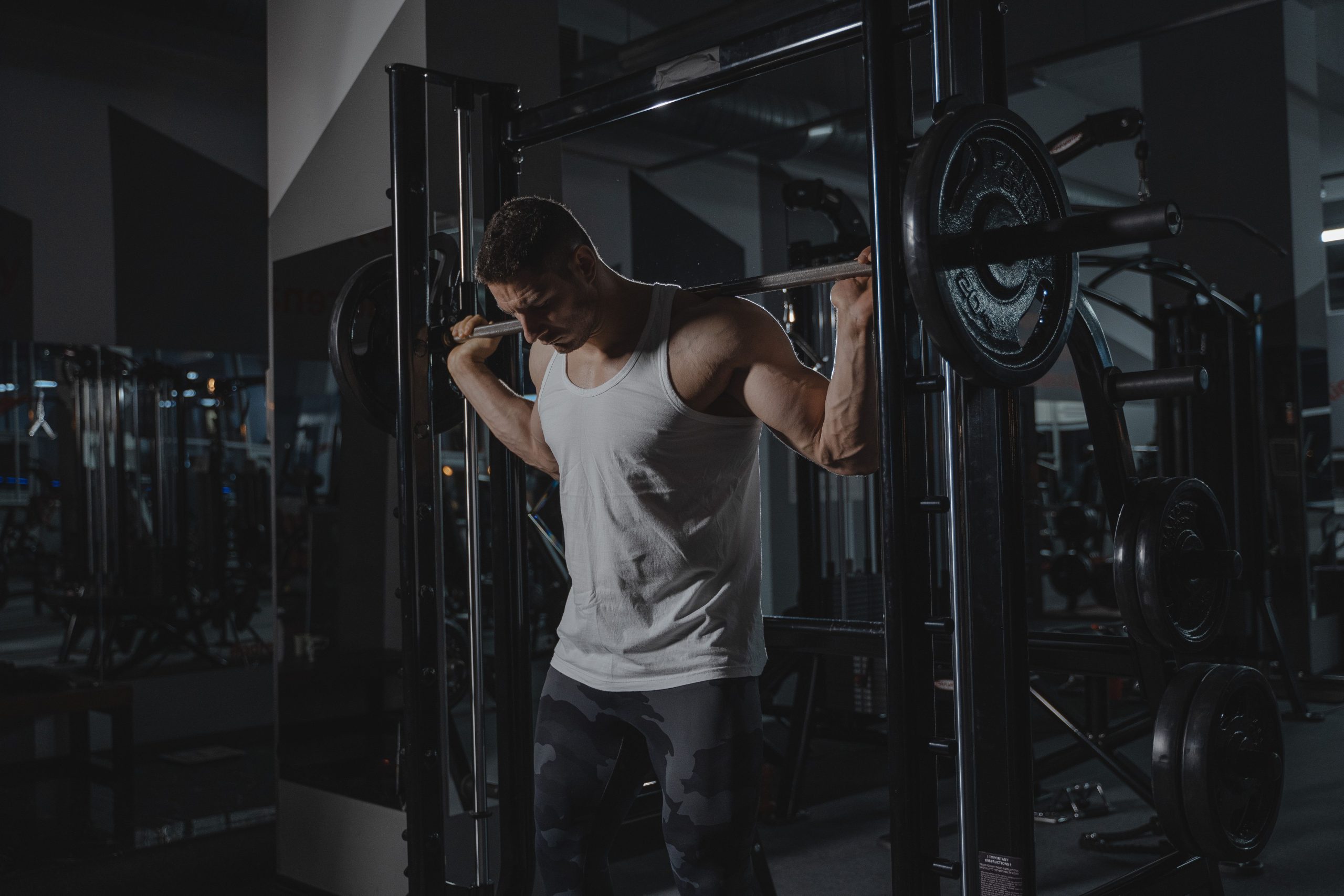
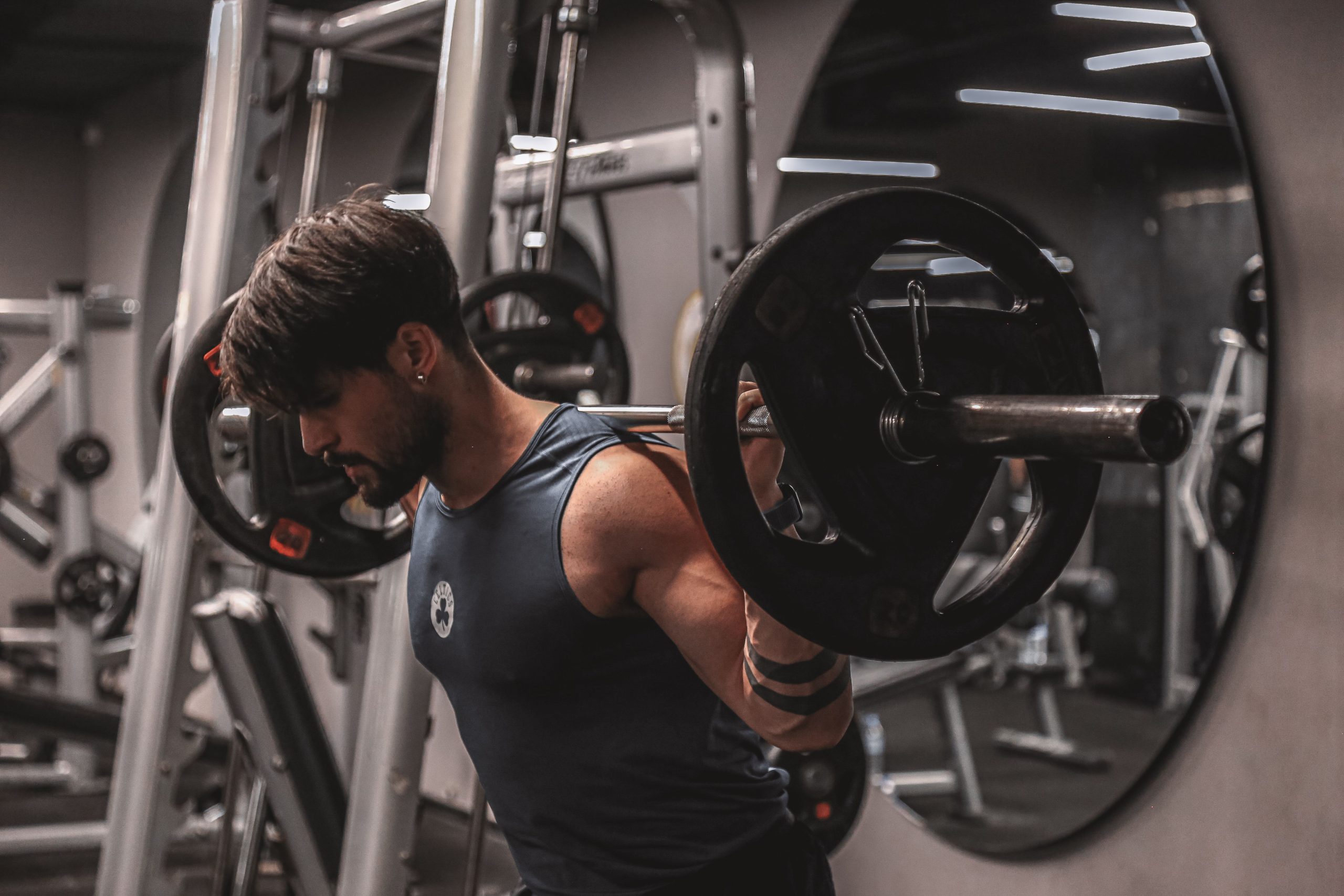
For over 3 months I focused on just air squats and eventually doing goblet squats with just a 5-15 lbs weight. But I wanted to get back to normal, I wanted to squat with a barbell again. One day after my mobility and stretching routine I decided it was time to try a barbell squat again. Stepping up to the rack I was actually nervous and felt a rush of anxiety. It had been over a year since I had done a barbell squat at that point. The ego in me wanted to put 45 lbs on the sides and go for it but I had to be smart. I started with just the weight of the bar and went through the motion, braced the core, went down and came back up. I didn’t feel any pain so in my head I said lets do it again, and again, and again. It felt great! No pain and I was going through the full movement. It was only the bar but just doing the motion again felt incredible. At that moment I knew I was going to be able to do what I loved again.
I think this is where people sometimes misunderstand successful injury recovery.
The first squat back doesn’t need to look impressive.
It doesn’t need to be heavy enough for Instagram.
It doesn’t prove anything to anyone else.
The win is being able to perform a movement that once scared you, at an appropriate level for your current capacity, and realizing that you can begin rebuilding from there.
How I Progressed Back to Heavier Squats
Once I could tolerate squatting again, I still wasn’t interested in rushing.
My progression was gradual.
I squatted once per week for a total of 3 weeks running. I would only squat the bar for 4 sets of 10-15 reps. After those first 3 weeks, I started adding 5lbs to the bar each week. I kept that formula until I reached 135 lbs. If you do the math, it took months, but it was worth the patience. Once I reached 135 lbs, I had finally gained my confidence back. Now here I am years later and I can squat 315lbs, and my back can handle it.
The biggest change from how I trained before my injury was paying attention to what my body could recover from, rather than only what I could technically complete.
Those are not always the same thing.
You can grind through a workout and call it a success.
But if you’re recovering from an injury, what happens later that day and the following morning matters too.
I Stopped Treating Perfect Form Like a Force Field
Form matters.
Technique matters.
But one of the things I had to unlearn was the idea that there is one perfectly safe spinal position that guarantees nobody will ever get hurt.
Human beings aren’t machines.
Bodies come in different proportions. Lifting technique changes with the exercise, anatomy, load, experience, mobility, fatigue, and goals of the lifter.
Good technique helps us manage force efficiently and consistently. It can also help us identify positions we tolerate well.
What it cannot do is give us magical immunity from injury.
That’s why my focus became less about chasing “perfect” form and more about developing repeatable, controlled technique that matched my current ability.
Pain Didn’t Always Mean I Had Reinjured My Disc
This was another difficult lesson.
Once you’ve experienced a serious injury, any sensation in that area can set off alarm bells.
A little stiffness?
It’s back.
A weird twinge?
I’ve reinjured myself.
Normal post-workout soreness?
Apparently my spine has exploded.
I had to get better at distinguishing between symptoms that genuinely warranted attention and the normal sensations that come with using and training a body.
That does not mean ignoring pain or pushing through neurological symptoms.
It means not automatically assuming every uncomfortable sensation represents new structural damage.
There Were Setbacks
Recovery wasn’t a straight line.
At one point I injured my knee, I hit my knee while at work and it had bruised so badly that I could feel it even in the bone. This severely limited my ability to do my daily mobility and stretching exercises. Within a week I could already feel my back tensing up again and my movement was feeling more limited.
I decided to put squatting on hold for a bit. After 3 weeks my knee recovered but when I returned to squatting I could feel my back was being put under too much pressure.
This meant I had to take a step back. I dropped the weight on the bar and focused more of my energy on regaining mobility and strengthening my core again.
This is the part of recovery stories that often gets edited out.
We like the neat version:
Injury.
Rehab.
Comeback.
Victory.
Real recovery tends to look more like injury, improvement, frustration, improvement, flare-up, adjustment, progress, random terrible Tuesday, more progress.
A setback does not automatically mean you’re back at the beginning.
Sometimes it means the current plan needs to change.
What I Do Differently in the Gym Now
Getting injured didn’t make me swear off lifting.
It made me a more thoughtful lifter.
A few things changed:
I Take Warm-Ups Seriously
My daily warmup before exercise always involves 10 minutes of mobility work and 5 minutes of stretching.
The focus of my mobility work and stretching is to prepare not just my back, but my entire core to undertake activity. In addition to preparing my core for exercise I will also warm up whatever muscles I will be utilizing that day. This isn’t optional, if I don’t have time for my warmup and a full workout, then I am cutting my workout short.
An example of my warmup for leg day goes like this
- Single leg hip rotation – 10-15 reps each side, 3 sets
- Leg swings – 10-15 reps each side, 3 sets
- Lunge stretch – 30 seconds each side, 3 sets
- 90/90 switches 10-15 reps
- Cat cow – 10-15 reps
- Child’s pose – 30 seconds
- Glute bridges – 10-15 reps
My warm-up is not only about performing a sacred list of corrective exercises, but also about checking in with how I’m moving that day and gradually preparing for the loads I plan to use.
I Build Up to Working Weight
I don’t need my first challenging repetition of the day to happen with my heaviest set.
Gradual warm-up sets let me practice the movement, assess how I feel, and prepare for heavier loading.
I Respect Fatigue
A technically demanding movement can change when you’re exhausted.
If my positioning is deteriorating or I’m no longer controlling the weight the way I want to, adding another ugly rep just to satisfy the number written in my program usually isn’t worth it.
I Train My Whole Body
My recovery did not revolve around one magical “back exercise.”
Strength is a system.
Legs, glutes, trunk musculature, upper back, grip, coordination, conditioning, recovery, and movement skill all contribute to what I can do with a loaded barbell.
I Don’t Chase Numbers at Any Cost
Progress still matters to me.
So does getting stronger.
But strength training has to fit into the rest of my life. I’m much less interested in proving what I can lift on one particular Tuesday if doing so compromises my ability to continue training consistently.
Can You Squat After a Herniated Disc?
Possibly.
But this is not a question anyone on the internet can answer for you individually.
A history of disc herniation does not automatically mean someone can never squat again. At the same time, your return to lifting should depend on your symptoms, diagnosis, neurological status, current strength and function, medical history, and the guidance of the professionals involved in your care.
For some people, returning to barbell squats may make sense.
For others, a different variation may work better.
And for someone in the middle of a serious acute injury, squatting may be completely inappropriate right now.
There is no prize for rushing.
You Don’t Have to Be Fearless to Start Rebuilding
One of the strangest things about my recovery was realizing I didn’t have to wait until I felt completely confident before progressing.
Sometimes the confidence came after the movement.
You try something manageable.
It goes well.
You try it again.
It goes well again.
Eventually your brain gets enough evidence to stop sounding the emergency alarm every time you approach a barbell.
That process cannot be rushed, but it can be built.
What I Wish I Had Known When I First Got Hurt
I wish I had known that a diagnosis wasn’t necessarily a prediction of what my body would be capable of forever.
I wish I had understood how much fear can influence the way you move after an injury.
I wish I had been more patient with the boring stages of rebuilding.
I wish I had understood that rehab and training aren’t necessarily separate worlds. Eventually, rehabilitation became training again. The movements became harder. The loads became heavier. The goals became bigger.
Most of all, I wish I could have shown the injured version of myself where I’d eventually end up.
After my injury I thought my days of weight lifting were over. Now I have hit personal records better than before my injury. I can squat more, bench more, jump higher, and I am more flexible than I have ever been in my life.
If you look too far into the future after an injury so many things can seem impossible. That is why you take it one day at a time, one small goal at a time.
Why This Experience Changed How I Coach
Going through my own injury changed the way I think about coaching people who are trying to return to training.
When someone tells me they’re afraid of hurting their back again, I understand why.
When a client is frustrated because they’re using weights that feel embarrassingly light compared with what they used to lift, I understand that too.
And when someone wants to skip three stages of progression because they’re finally having a good week?
Yeah.
I understand that one especially well.
Fitness isn’t just about getting stronger. Fitness is about creating a lifestyle that allows you to live injury free, stress free, and permits you to do all the activities you love.
Coaching for me isn’t just about progressing strength anymore, coaching for me is about ensuring my clients are mobile, flexible and agile enough to take on all the things life requires of them. I still train people who are trying to focus on strength and competition, but I emphasize the importance of taking care of your body for the long term and not just focusing on the numbers on your lifts that day.
No matter what your current situation is (have never worked out a day in your life or have been training for years) my coaching methods are designed to meet you where you are at and build a stronger foundation to either overcome an injury or help prevent injuries from happening.
I am not a physical therapist or a sports medicine doctor so I cannot give medical advice about your injury and its diagnosis.
Coaching does not replace medical evaluation or physical therapy.
But once someone is cleared for exercise, good coaching can help bridge the gap between simply being able to function and feeling strong, capable, and confident in the gym again.
That gap is where I love working.
From Herniated Disc to Squatting Again
I wouldn’t recommend a herniated disc as a personal-development exercise.
Zero stars.
But the experience changed my relationship with training.
I learned that strength isn’t only the weight on the bar.
Sometimes strength is starting over with an empty one.
Sometimes it’s doing the boring exercise your ego hates.
Sometimes it’s stopping a set early.
Sometimes it’s trusting your body enough to attempt a movement that scared the hell out of you six months earlier.
And sometimes, eventually, it’s loading plates onto your back again
I was in the darkest place of my life when I first injured my back. People don’t understand that it’s not just a physical pain, but it is an emotional pain. Not being able to do the things you love, having to cancel plans with loved ones because you know your back won’t be able to handle the activity, struggling to get out of bed and take on the day because you woke up in agonizing pain. I never thought I would escape it, but here I am years later and I am now grateful for what I experienced. We take for granted the bodies we are given. When we are young we don’t realize the blessing we have to be fully functional and not have to worry about hurting ourselves by sneezing too hard. Today I am not only stronger physically, but mentally as well. This journey has taught me so much about my true capabilities. It has shown me that sometimes what seems impossible now, can become possible in the future with planning, patience, and passion.
Want Help Getting Strong Again?
If you’ve already been medically cleared to return to exercise but you’re struggling with the jump from “rehab” back into actual strength training, that’s something I can help with.
My coaching is built around meeting you where you are, rebuilding strength progressively, and helping you become confident under load again instead of spending the rest of your life afraid of certain movements.